Black Home Font: A Versatile Brushed Display Typeface for Modern Design
In the crowded landscape of digital typography, finding a typeface that balances personality with readability can be a significant challenge for designers. Black Home emerges as a compelling option in this space, offering a distinct brushed aesthetic that bridges the gap between casual hand-lettering and structured display fonts. As a cool, adaptable display font, it has garnered attention for its utility across various mediums, including t-shirts, sportswear, logos, and advertisements. This article evaluates the characteristics of Black Home, exploring its practical applications, benefits, and limitations to help designers determine if it aligns with their specific project requirements.
Understanding the Aesthetic and Structure of Black Home
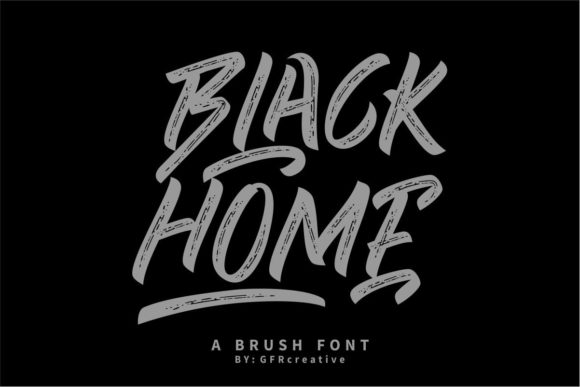
At its core, Black Home is defined by its brushed texture. Unlike clean, geometric sans-serifs or traditional serifs, this font mimics the stroke of a dry brush or marker, introducing organic imperfections into each character. This "cool" visual quality provides an immediate sense of energy and movement, making it stand out in static designs. The font is categorized as a display typeface, meaning it is optimized for larger sizes where its unique textures and shapes can be fully appreciated. Using it at small body text sizes would likely compromise legibility due to the intricate details of the brush strokes.
The adaptability of Black Home lies in its balanced weight distribution. While it possesses the ruggedness associated with streetwear and urban design, it maintains enough structural integrity to remain professional in branding contexts. It does not lean too heavily into chaos, which allows it to function effectively in both playful and serious commercial applications. For designers seeking a typeface that feels human-made rather than mechanically generated, Black Home offers a middle ground that is neither overly polished nor excessively rough.
Key Applications and Ideal Use Cases
One of the primary reasons designers evaluate Black Home is its versatility in apparel and merchandise design. The font’s bold strokes and textured edges make it particularly suitable for t-shirts and sportswear. In these contexts, the font conveys a sense of dynamism and athleticism. When printed on fabric, the brushed effect can add depth, preventing the design from looking flat or generic. It works well for team names, motivational slogans, and brand logos on clothing, where impact and immediate visual recognition are prioritized over long-form readability.
Beyond apparel, Black Home is a strong candidate for logo design and advertisements. For brands aiming to project an image of authenticity, creativity, or approachability, this typeface can serve as a central visual element. In advertising, particularly for lifestyle products, fitness gear, or creative services, the font helps capture attention quickly. Its distinct character allows it to function as a standalone graphic element, reducing the need for additional embellishments or icons. This efficiency can be valuable in social media graphics and digital banners where space is limited and clarity is essential.
- Apparel Design: Ideal for printing on t-shirts, hoodies, and athletic wear due to its bold, textured appearance.
- Branding and Logos: Suitable for companies wanting to convey energy, creativity, or a modern urban vibe.
- Advertising Campaigns: Effective in headlines and short copy where visual impact is crucial.
- Packaging: Can be used for product labels that require a handmade or artisanal feel.
Evaluating the Benefits and Tradeoffs
When considering Black Home for a project, it is important to weigh its advantages against its limitations. One of the most significant benefits is its ability to inject personality into a design without appearing overly decorative. Many brushed fonts suffer from poor kerning or inconsistent stroke widths, which can make them difficult to work with. Black Home, however, is designed with adaptability in mind, allowing for easier integration into existing layouts. Its "cool" factor is inherent, reducing the need for extensive manipulation to achieve a trendy look.
However, there are tradeoffs to consider. As a display font, Black Home is not suitable for body copy. Attempting to use it for paragraphs or detailed information will result in poor readability and viewer fatigue. Additionally, while the brushed texture adds character, it can sometimes clash with highly minimalist or corporate design systems. If a brand requires a sterile, ultra-professional, or traditional aesthetic, Black Home may feel too informal or aggressive. Designers must ensure that the font’s energy aligns with the overall tone of the brand identity.
Another consideration is scalability. While the font performs well at medium to large sizes, extremely large formats may reveal pixelation or irregularities in the brush edges if the source file resolution is not high enough. Conversely, at very small sizes, the textured details may merge, causing letters to become indistinct. Therefore, careful testing across different sizes and mediums is recommended before finalizing any design.
Decision-Making Insights: Is Black Home Right for Your Project?
To determine whether Black Home is the appropriate choice, designers should assess the specific goals of their project. If the objective is to create a design that feels energetic, modern, and slightly unconventional, this font is a strong fit. It is particularly effective for targets audiences who value authenticity and style, such as younger demographics interested in street culture, fitness, or creative arts.
On the other hand, alternatives may be worth considering if the project demands high legibility at small sizes or a more formal tone. For instance, if you are designing a legal document, a corporate annual report, or a website with dense informational content, a clean sans-serif or serif font would be more appropriate. Similarly, if the brand identity is rooted in tradition, luxury, or minimalism, a more refined typeface might better serve the strategic goals.
It is also helpful to consider the technical environment. Black Home works best in digital and print formats where high-resolution rendering is possible. For low-resolution displays or environments with poor printing quality, the nuanced brush strokes may not translate effectively. In such cases, a bolder, simpler font with less texture might provide a more consistent result.
Practical Tips for Implementation
For those who decide to incorporate Black Home into their workflow, several practical steps can enhance its effectiveness. First, pay close attention to spacing. Brushed fonts often benefit from slightly tighter letter-spacing to maintain cohesion, but this must be balanced against the risk of characters overlapping. Second, consider pairing Black Home with a neutral, clean sans-serif font for secondary text. This contrast helps anchor the design and ensures that informational content remains readable while the display font handles the visual heavy lifting.
Color selection also plays a crucial role. The textured nature of Black Home can interact differently with various backgrounds. High-contrast combinations, such as white text on a dark background or vice versa, typically yield the best results. Experimenting with overlay modes in design software can also help integrate the brush texture more naturally with photographic elements, creating a seamless and professional finish.
In conclusion, Black Home is a versatile and stylish display font that offers significant value for specific design applications. Its brushed aesthetic provides a modern, energetic feel that is well-suited for t-shirts, sportswear, logos, and advertisements. By understanding its strengths and limitations, designers can make informed decisions about when to utilize this typeface. Whether you are looking to refresh a brand identity or create eye-catching merchandise, Black Home offers a practical solution for adding character and impact to your visual communications. Evaluating it against your project’s specific needs will ensure that it serves as an effective tool in your design toolkit.